

Puzzles and logic games are engaging offline brain teasers for adults.
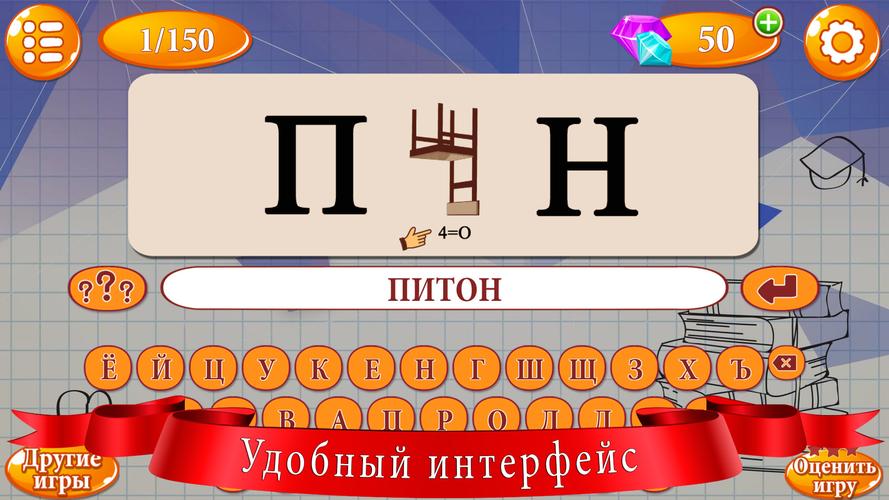
Rebus puzzles offer free and intriguing challenges for adults, featuring cleverly encoded riddles. These tricky word puzzles contain encrypted words deciphered through images, letters, numbers, musical notes, arrows, objects, and other symbols—with no limit on the number of clues used.
The first logic puzzles originated in France during the fifteenth century, with the first printed collection of puzzles published in 1582. Playing various puzzle games is a rewarding and entertaining pastime—a true exercise in logic and reasoning. Solve complex rebuses and puzzles offline, ideally with paper and a pen handy to note down letters or syllables you've already figured out.
If you enjoy word games, riddles, arithmetic puzzles, and problem-solving, you will love these brain-training logic games!
What’s in the game:
• Logic riddles for adults;
• Fun offline games for travel;
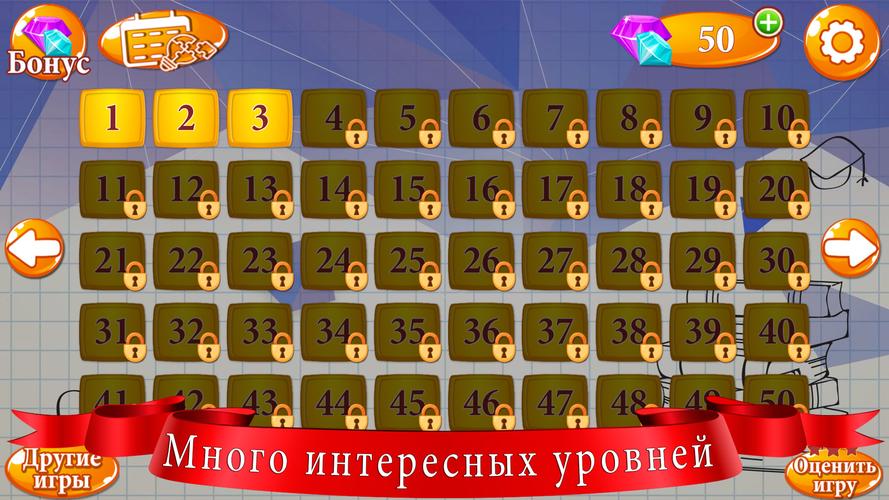
• Numerous exciting levels;
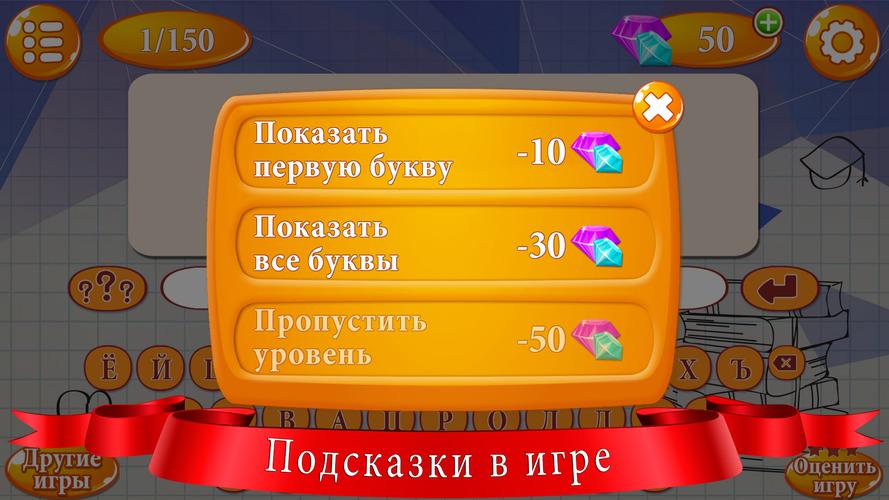
• Various hint types;
• Weekly puzzle challenges;
• Bonus levels;
• Soothing background music.
In this smart rebus puzzle game, you'll progress through many levels filled with complex logic challenges. Gameplay is enhanced by pleasant music and sound effects, which you can disable anytime. If you get stuck, use the hint feature by tapping the question mark button.
These offline puzzle games follow specific solving rules:
- Item names shown in a rebus must be read in the nominative case and singular form.
- Sometimes an object in the image may be pointed to with an arrow.
- A comma at the start means skip the first letter, a comma at the end means drop the last letter. The number of commas indicates how many letters to omit.
- If a letter is made of another letter, read it by adding “of.”
- If one letter or object follows another, add “for” while reading.
- When an object or letter appears below another, use "on," "above," or "under" in your reading.
- When one letter is written on another, read it with “by.” If a letter lies beside or is attached to another, add “with.”
- If an object is shown upside down, read its name backward.
- A crossed-out letter next to an object means remove that letter from the word. If another letter appears above it, replace them. An equals sign means the same replacement applies.
- Numbers above the image (like 5, 4, 2, 3) indicate the order in which to read the letters of the object’s name.
- If an object is shown sitting, running, or lying, add the appropriate third-person present tense verb (sits, runs, lies).
- In some rebuses, syllables such as “fa,” “mi,” “re,” or “do” are represented by musical notes.
The puzzles may seem simple, but first impressions can be deceptive. Challenge your mind and prove your logic and creativity! These educational games will put your problem-solving skills to the test.
### What's New in the Latest Version 0.1.15
Last updated on Apr 27, 2024New levels added